How Construction Site Injuries Are Investigated After an Accident?
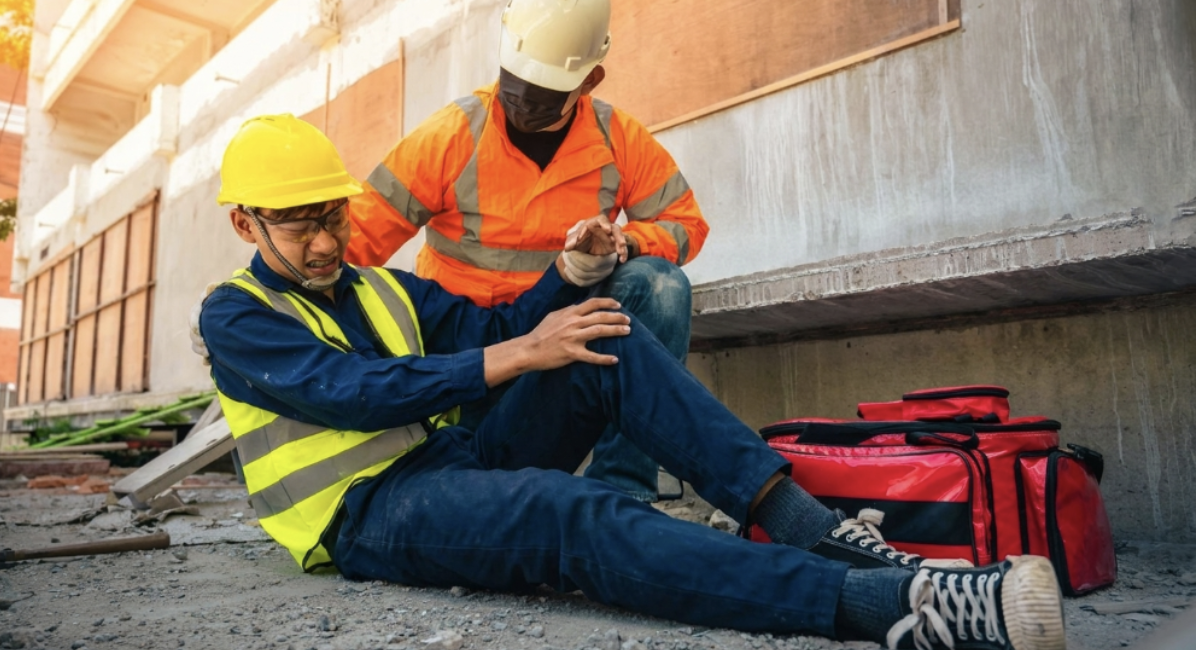
Construction sites are among the most dangerous workplaces in the U.S. According to the Bureau of Labor Statistics (BLS), over 1,000 construction workers die on the job every year. Another 200,000+ suffer nonfatal injuries annually.
When an accident happens, a construction site injury investigation begins. It figures out who is legally responsible. It shapes how much compensation an injured worker receives. It also decides whether the hazard gets fixed before another worker gets hurt.
What Does a Construction Site Injury Investigation Do?
A construction site injury investigation examines the physical scene, the equipment involved, the safety protocols in place, and the decisions made by every party on the job. It serves 3 core purposes:
- Establishes what caused the accident. This goes beyond the surface event. It uncovers the root failure underneath.
- Determines accountability. It identifies whether employers, general contractors, subcontractors, or equipment manufacturers bear legal responsibility.
- Prevents recurrence. It leads to corrective actions so the same hazard does not injure another worker.
OSHA officials, employer safety teams, insurance adjusters, and attorneys each conduct separate investigations into the same accident. Each party has different goals.
The 8 Stages of a Construction Site Injury Investigation
1. Securing the Scene
The scene must be locked down before anything is touched. Every minute of delay risks losing proof. The 4 most critical actions in the first hour are:
- Shut down equipment and block off the work area.
- Call emergency services and get injured workers to a doctor.
- Alert the site supervisor and project manager within minutes.
- Leave all tools, materials, and gear exactly where they fell.
Site managers who move items before the scene is recorded face serious legal risk. Touching evidence can ruin the entire inquiry.
2. OSHA Notification
For serious injuries, OSHA must be told. The law requires employers to report:
- A worker’s death within 8 hours
- A hospital stay, amputation, or loss of an eye within 24 hours
OSHA agents can review records, talk to workers, and issue fines. Their findings go on the public record. Employers and insurers cannot easily dispute them. OSHA citations are among the strongest proof in third-party legal claims.
3. Physical Evidence Collection
Agents look at 5 types of physical proof at the site:
- Site conditions. Light levels, ground state, weather, heat, and visibility at the time of the accident.
- Equipment and tools. Condition, repair history, safety guards, and OSHA compliance.
- Safety structures. Scaffolding state, fall protection, guardrails, barriers, and warning signs.
- Physical clues. Broken parts, worn gear, and debris patterns that show what happened and in what order.
- Photos and video. Time-stamped shots from many angles, showing both close-up defects and the full site layout.
For major cases, crash reconstruction experts rebuild the exact chain of events. These experts include structural engineers and safety pros.
4. Record Review
Physical proof alone rarely tells the full story. A full inquiry also looks at 6 types of records:
- OSHA audit reports and past citations
- Company safety rules and staff training logs
- Equipment repair and pre-use inspection records
- Subcontractor deals and their safety duties
- Standard Operating Procedures (SOPs) for the task being done at the time
- Workers’ medical records and any past light-duty assignments
These records show if the accident was a one-time event or part of a larger pattern of safety failures. Missed checks, absent training, and ignored hazards are where legal fault is most often found.
5. Witness Interviews
Witness accounts are among the most useful pieces of evidence in any injury inquiry. They are also the most fragile. Agents speak to each witness alone, in a calm setting. The 3 most important groups to interview are:
- The injured worker (once stable). They describe the task, the scene, and the chain of events from their own view.
- Coworkers and bystanders. They confirm the physical proof and fill in gaps.
- Supervisors and site managers. They explain safety rules, job duties, and what went wrong.
Accounts must be written down and signed fast. Memory fades. Outside pressure can change what people say.
6. Root Cause Analysis
Root cause analysis is the most critical step. Surface causes explain what happened. An unsecured ladder, a missing guardrail, and a broken crane are all surface causes. Root causes explain why those problems existed in the first place.
Root causes fall into 2 groups:
System failures by management, including:
- No safety training, or training that was never given
- Safety rules that existed on paper but were never enforced
- Budget cuts to safety gear or inspection schedules
- Poor contact between general contractors and subcontractors
On-site failures, including:
- Equipment not kept up to maker standards.
- Workers were pushed to finish tasks in unsafe conditions.
- No oversight during high-risk tasks
- Site layouts that put workers in known danger
Agents use tools like 5-Why Analysis and fishbone diagrams to trace surface causes back to their roots. An inquiry that stops at the surface and blames the injured worker fixes nothing.
7. The Investigation Report
Every formal injury inquiry produces a written report. It covers the timeline, all physical and paper proof, witness accounts, violations found, root causes, and fixes needed.
The report drives 3 major outcomes:
- OSHA fines. Employers or contractors get citations and penalties.
- Workers’ comp claims. The report shows the nature and cause of the injury for benefit approval.
- Civil lawsuits. The report supports legal claims against general contractors, subcontractors, or equipment makers.
For hurt workers, this report is often the most important paper in deciding how much money they get.
8. Corrective Action
The last stage turns findings into action. Hazards must be fixed. They cannot just be noted. Fixes include:
- Changing work steps to remove repeat hazard exposure
- Repairing or replacing faulty equipment
- Retraining workers and supervisors on high-risk tasks
- Updating safety rules and making sure they are followed
- Checking nearby areas of the site for the same unaddressed hazards
OSHA is clear: the goal of an injury inquiry is to remove hazards, not to assign blame.
Who Runs the Inquiry? The 4 Key Parties
1. OSHA Agents check whether federal safety laws were broken. They issue fines, create a public record, and often uncover third-party violations that support legal claims.
2. Employer Safety Teams run internal inquiries for workers’ comp and to find fixes. Their reports can be used in court later.
3. Insurance Adjusters investigate to reduce what the employer or contractor has to pay. Their goal is to lower the payout. Hurt workers should know this before speaking with them.
4. Lawyers and Independent Agents work for the hurt worker. They use the same proof, witnesses, and records, but with one goal: to show the full scope of negligence and losses.
What Injured Workers Can Do to Protect Their Rights?
Injured workers who take these 7 steps significantly strengthen their legal position:
- Report the accident immediately to a supervisor, in writing, on the same day it happens.
- Get medical care right away. Even minor injuries can worsen. Gaps in medical records create gaps in claims.
- Photograph the scene before anything is moved, repaired, or cleaned up.
- Collect witness contact information. Get names and phone numbers of anyone who saw the accident or the hazardous conditions that caused it.
- Request copies of all relevant records, including incident reports, OSHA filings, medical records, and any documentation the employer prepares
- Do not give recorded statements to insurance adjusters without consulting an attorney first. Adjusters use these statements to limit compensation, not protect it.
- Consult a construction accident attorney early. Early legal involvement preserves evidence, prevents costly mistakes, and ensures claim deadlines are not missed.
Workers’ Compensation vs. Third-Party Liability
Most hurt construction workers think workers’ comp is their only option. That is one of the most costly errors a hurt worker can make.
Workers’ comp pays part of lost wages and medical bills. It does not require proving fault. But it does not pay for pain and suffering. It does not cover full lost income or long-term disability in most cases.
Third-party legal claims apply when someone other than the direct employer caused the accident through negligence. This includes general contractors, subcontractors, equipment makers, and property owners. These claims let hurt workers get the full range of losses that workers’ comp does not cover. This includes pain and suffering, future medical bills, and lost income capacity.
The injury inquiry builds the proof for third-party claims. OSHA citations naming contractors, records of equipment flaws, and proof of site-wide safety failures all form the base for these claims.
The 5 Most Common Root Causes Found in Construction Injury Inquiries
- Fall protection failures. Missing guardrails, unsecured scaffolding, and absent personal fall arrest (PFA) systems are the top causes. Falls alone make up about 36% of all construction deaths.
- Struck-by incidents. Weak barriers, loose overhead materials, and poor traffic control near heavy equipment are the main factors.
- Electrocution. Unguarded power lines, bad grounding, and work near live equipment without lockout/tagout (LOTO) steps cause these deaths.
- Caught-in or caught-between accidents. Unguarded machines, poor trench walls, and equipment too close to workers are the key causes.
- Lack of safety training. Workers get put on high-risk tasks without proof of competency training. This is most common in excavation, scaffolding, and electrical work.
Protect Your Rights After a Construction Site Injury
A construction site injury investigation is not something that happens to you. You can shape it. Document the scene. Gather witnesses. Work with legal counsel who understands how these investigations work and how to use them to build the strongest possible claim.Contact The Law Office of Edward Seplavy today for a free consultation, wherean Athens Workers Compensation Lawyer investigates construction accidents, identifies every liable party, and pursues the full compensation our clients deserve, including damages that workers’ compensation alone will never cover.